Search Results
352 results found with an empty search
- #EDRinMA HEARING
June 19th on Beacon Hill marked the date for the state hearing on Election Day Registration (EDR). A measure said by Secretary of State William F. Galvin to be “the final step we need to take to make sure voters have every opportunity to participate in every election.” Currently, voters must register 20 days before election day to cast a ballot. By allowing for Election Day Registration, lawmakers and community leaders hope to increase voter turnout and create a more efficient form of political participation. The initiative would allow prospective voters to register at the polls and or fix errors in their current registration on Election Day by providing proof of residency. EDR aims to ensure an individual’s access to the ballot in case there is an error in the registration. These errors include but are not limited to a range of scenarios such as of a misspelled name, a missing apartment number, or not updating a new address. EDR has the support of Massachusetts’ Attorney General, Maura Healey, who called the right to vote “the heart of our democracy.” Testifying in favor of the bill, Healey assured, “We need to do all we can to reduce barriers to participation in our elections and ensure the ballot is fully accessible to all eligible voters.” Healey, highlighting the socioeconomic disparity in voter turnout. Emphasizing that this measure would specifically help, and encourage, people of color, low-income residents, renters, and young people. All being demographics who have historically felt disenfranchised from the political process, be encouraged to vote. MassVOTE’s own Cheryl Clyburn Crawford, the Executive Director of MassVOTE, testified saying “EDR is an effective means to extend the vote to the millions of Americans who suffer from disenfranchisement due to the simple fact that they missed an unnecessarily early voter registration deadline. Requiring voters to register well in advance of an election does not work for many citizens. Allowing voters the ability to register and vote on Election Day and during the early voting period is the single reform that most effective remedies the problems we witness every election”. Since MassVOTEs’ inception in 1998, the organization has been at the forefront of public advocacy for Election Day Registration. Additional testimony included fellow Election Modernization Coalition members; Rashan Hall, the Director of the Racial Justice Program at the ACLU of Massachusetts, Mary Ann Ashton, the president of the League of Women Voters of Massachusetts, Pam Wilmot, the Executive Director of Common Cause Massachusetts, Jonathan Cohn, the Issues Chair at Progressive Massachusetts, Janet Domenitz, the Executive Director of MassPIRG, Sophia Hall, the Supervising Attorney of Lawyers for Civil Rights, and Beth Huang, the Director of the Massachusetts Voter Table. Massachusetts has made strides in creating a more efficient voting process. The EDR hearing comes on the heels of Governor Baker’s decision last August to sign into law Automatic Voter Registration (AVR). The new law automatically registers eligible voters when they interact with the Registry of Motor Vehicles or MassHealth. For those who do engage with state agencies or have not completed a voter registration form, EDR would allow them to register on Election Day and cast their ballot. EDR and AVR together simplify, modernize our election systems, and keep the costs of our elections contained. If you support #EDRinMA and believe that no voter should be left behind, we encourage you to contact your elected representatives and voice your support. If you are an organization interested in formally endorsing EDR, please contact Policy Manager Ian Kea (ikea@MassVOTE.org). Read Full Hearing PR Boston Globe Coverage
- CELEBRATING MASSACHUSETTS AFRICAN-AMERICAN SUFFRAGETTES
Cheryl Clyburn Crawford, the executive director of MassVOTE, listened Friday to the Women's Equality Day program on the Boston Public Garden
- #MASSCOUNTS RALLY -- POST SCOTUS RULING AGAINST ADDITION OF CITIZENSHIP QUESTION
In late June, The U.S. Supreme Court decided to halt the inclusion of a citizenship question on the 2020 Census. In a 5-4 opinion, Chief Justice John Roberts said there was "a significant mismatch between" Department of Commerce Secretary Wilbur Ross' decision to add the question "and the rationale he provided." Statewide and local advocates flocked to the State-House steps on June 27th to praise the court's decision. Attorney General Maura Healey joined activists from several organizations including MassVOTE. Healey was one of 18 attorneys general who filed a lawsuit challenging the Trump administration decision to add the question. At the event, she said: "It (The 2020 Census) determines our representation in Congress; it determines our representation in the electoral college; it determines what we are going to receive as a state for federal funding that will help schools and transportation and healthcare and so many other important services." Healey also stressed the importance of immigrants in Massachusetts, detailing that one in five workers is born outside the United States, making immigrants 17% of the population. Beth Huang, of the Massachusetts Voter Table, encouraged supporters to remind people expressing fears over their immigration statuses their census responses cannot be shared with landlords, employers or law enforcement. Gladys Vega, of the Chelsea Collaborative, said she and others would make sure everyone, including non-citizens, is counted, saying: "We will work extremely hard, we will knock on every door." The impacts of an undercounted Census last a decade. The decennial census impacts $16 billion (40% of the state budget) in funding for our Commonwealth and directly accounts for $1.2 billion in funding for vital programs in Massachusetts. For example, some allotments directly affected by census population counts include: Special Education Grants to States, Title 1 Grants to Local Education Agencies, Special Supplemental Nutrition Program for Women, Infants, and Children (WIC), Community Development Block Grants, Children's Health Insurance Program (CHIP), Low Income Home Energy Assistance Program, and many others. We have already seen the impact the census has had in Massachusetts. In 2010, when Congressman Barney Frank lost his seat due to his district undercount and thus condensed. The loss took the Congressional representation of the Massachusetts delegation from 10 to 9 in the U.S. House of Representatives. In a statement, Bill Galvin, who oversees the Census count, described himself as pleased with the outcome, and further detailed: "While the Court has held that the federal government cannot go forward with the printing of 2020 Census questionnaires that include a citizenship question unless they provide a valid and non-pretextual reason for doing so, I remain concerned that any attempt by the federal government to further delay the printing of census forms would jeopardize our ability to get a complete and accurate count." MassVOTE and our allies believe that democratic participation is crucial for having accurate and accountable representation in our government. By not filling out the census, we risk the vital programs and representation needed for communities to function. An accurate count supports funding for our community services and ensures fair political representation.
- YCL SPOTLIGHT: KENNY
How do you remain Non-Partisan in your role? Q1: I remain Non-partisan by not feeding into the hype. I myself am an unpredictable person so I will not always agree with something because a Democrat or Republican said it nor will I side with any political party. The reason being because I believe in whats right, the issue, not the hype. With the knowledge I have, I refrain from being partisan, easily in fact. How do you respond if someone says their vote does not matter? Q2: When people tell me their vote does not matter, they underestimate their power. There is a probability for their vote to be the real game changer for the whole election. I aim to educate, to show the true power of their vote. How do we make voting easier? Q3: To making voting easier, I do not have a direct solution off the top of my head. I think voter ID laws restrict, cause unnecessary stress will and make it harder to make a difference. We should have Election Day Registration so we will be able to register and vote the same day. What's the youth role in civic engagement? Q4: Lets admit it the older generations have made a mess in the government. We need youth, youth leadership specifically.
- COMMUNITY CONVERSATION: 2019 BOSTON CITY COUNCIL AT-LARGE FORUM
Click the poster for the full video.
- ELECTION DAY REGISTRATION GETS ITS DAY AT THE JOINT COMMITTEE ON ELECTION LAWS HEARING
For immediate release: June 20, 2019 Contact: Ian Kea, MassVOTE, ikea@massvote.org | 617-542-8683 Election Day Registration (EDR) Presented to State Election Laws Committee BOSTON, MA –Organizations dedicated to enhancing voting rights from around the Commonwealth gathered at the State House on Thursday, June 20, to testify in support of Election Day Registration, also known as Same-Day Registration. The EDR legislation introduced by Rep. Jen Benson, Rep. Liz Malia and Sen. Cynthia Creem (H. 636, H. 685 and S. 396) aims to ensure that all Massachusetts voting eligible citizens with proof of residency are able to register or fix errors in their current registration on Election Day and during the early voting period and subsequently cast their ballot. The policy has found continuous success with 21 states having passed the measure since 1973. Election Day Registration has received support from Massachusetts leaders including Secretary of State William Galvin and Attorney General Maura Healey. On the federal level, the entire Massachusetts Congressional Delegation has supported HR1, which includes EDR. “Anybody can find themselves on the wrong side of the voter registration deadline, especially renters who have recently moved, people working multiple jobs, people with disabilities, and people with less reliable transportation. But these factors mean there’s definitely a racial equity issue here, and Election Day Registration levels the playing field so all qualified voters can have their ballots counted,” said Rahsaan Hall, Director, Racial Justice Program, ACLU of Massachusetts. “The League of Women Voters strongly supports Election Day Registration because it reduces barriers to voting, making it easier for citizens to fully participate in our democracy. Massachusetts has made progress in enacting common-sense election reforms such as Automatic Voter Registration. The next logical step is implementing Election Day Registration,” said Mary Ann Ashton, president, League of Women Voters of Massachusetts. “It has never been more important to protect and strengthen our democratic institutions, Election Day Registration is a simple and common sense reform that will increase voter participation and ensure that every eligible voter can cast a ballot. It has been working well in 21 other states and will do so here in Massachusetts” said Pam Wilmot, Executive Director, Common Cause Massachusetts. “Given that the average American moves more than 11 times over the course of their lives, moving near Election Day could lead to disenfranchisement under the current system. Likewise, given the stress of school, work, family, and myriad other commitments, many voters may first start to learn about an election after the registration window has passed. Election Day Registration is a simple, proven solution," said Jonathan Cohn, Issues Chair, Progressive Massachusetts. “We are starting to feel a little bit like Horton the Elephant, to be honest. We have been sitting on this bill for too long. We truly hope it is the year that this bill hatches into a much needed law,” said Janet Domenitz, Executive Director, MassPIRG. “Implementing EDR in Massachusetts is a critical step to curbing deep structural barriers to the ballot box for voters of color in the Commonwealth,” said Sophia Hall, Supervising Attorney, Lawyers for Civil Rights. “When poll watching last November, we saw countless people turned away from the polls or issued provisional ballots because they moved recently. Election Day Registration will help thousands of voters cast their ballots, including young people moving to Massachusetts in search of opportunities and communities of color, working families, and low-income people displaced from their homes because of rising rents," said Beth Huang, Director, Massachusetts Voter Table. “EDR is an effective means to extend the vote to the millions of Americans who are disenfranchised due to the simple fact that they missed an unnecessarily early voter registration deadline. Requiring voters to register well in advance of an election simply does not work for many citizens. Allowing voters the ability to register and vote on Election Day and during the early voting period is the single reform that most effectively remedies the problems we witness every election,” said Cheryl Clyburn Crawford, Executive Director, MassVOTE. The Election Modernization Coalition is led by ACLU of Massachusetts, Common Cause Massachusetts, the League of Women Voters of Massachusetts, MASSPIRG, MassVOTE, the Massachusetts Voter Table, and Progressive Massachusetts. QUICK HITS · A 40-year track record of success. · States adopting EDR see on average a 4 to 7 percent increase in voter participation (National Conference of State Legislators) · In the last two years nine new states have implemented or enacted the policy – California, Maryland, Michigan, Nevada, New Mexico, New York, Washington, Utah, and Vermont
- Voting Rights Supporters Flock to State House for Election Day Registration Lobby Day #EDRinMA
For immediate release: June 5, 2019 Contact: Ian Kea, MassVOTE, ikea@massvote.org | 617-542-8683 Voting rights supporters flock to the State House for The Election Modernization Coalition’s Election Day Registration Lobby Day (EDR) BOSTON, MA – Voting rights activists from around the Commonwealth gathered at the State House to voice their support at the Election Modernization Coalition’s Election Day Registration lobby day on Wednesday June 5th. The EDR Legislation introduced by Rep. Jen Benson, Rep. Liz Malia and Sen. Cynthia Creem (H. 636, H. 685 & S. 396) would establish a system for Massachusetts voting eligible citizens that would allow them with proof of residency to register or fix errors in their current registration on Election Day and during the early voting period. The policy has enjoyed tremendous success in 20 states and was first passed as early as 1973 in Maine and Minnesota. Election Day Registration has received support from state leaders including Secretary of State Bill Galvin and Attorney General Maura Healey. On the federal level the whole Massachusetts Congressional Delegation has casted their support for HR1 which includes EDR. "Voting is a hallmark of democracy, and equal access to the ballot is the most fundamental right. Election Day Registration has been proven to increase participation for voters who are younger, lower-income, and people of color, ensuring more people are able to participate in our democracy,” said Rahsaan Hall Racial Justice Program Director for the ACLU of Massachusetts. "The League of Women Voters strongly supports Election Day Registration to make it easier for citizens to participate in our democracy. At a time when states across the country are passing laws reducing access to the ballot box, it is important for Massachusetts to continue to lead in positive election reforms," said Mary Ann Ashton, president, League of Women Voters of Massachusetts. “Given that the average American moves more than 11 times over the course of their lives, moving near Election Day could lead to disenfranchisement under the current system. Likewise, given the stress of school, work, family, and myriad other commitments, many voters may first start to learn about an election after the registration window has passed. Election Day Registration is a simple, proven solution," said Jonathan Cohn Issues Chair of Progressive Massachusetts. “If we want to guarantee every single eligible voter the right to vote, this is an essential and major part to completing that mission. We cannot continue to disenfranchise our own voters,” said Cheryl Clyburn Crawford, Executive Director, MassVOTE. “Implementing EDR in Massachusetts is a critical step to curbing deep structural barriers to the ballot box for voters of color in the Commonwealth,” said Sophia Hall, Supervising Attorney at Lawyers for Civil Rights. “It has never been more important to protect and strengthen our democratic institutions. Election Day Registration is a simple and common sense reform that will increase voter participation and ensure that every eligible voter can cast a ballot. It has been working well in 20 other states and will do so here in Massachusetts,” said Pam Wilmot, Executive Director of Common Cause Massachusetts. “When poll watching last November, we saw countless people turned away from the polls or issued provisional ballots because they moved recently. Election Day Registration will help thousands of voters cast their ballots, including young people moving to Massachusetts in search of opportunities and communities of color, working families, and low-income people displaced from their homes because of rising rents," said Beth Huang, Director of the Massachusetts Voter Table. The Election Modernization Coalition is led by ACLU of Massachusetts, Common Cause Massachusetts, the League of Women Voters or Massachusetts, MASSPIRG, MassVOTE, the Massachusetts Voter Table, and Progressive Massachusetts.
- YCL OF THE MONTH: JAYLLA
How do you remain non-partisan in your role as a YCL? As a YCL at MassVote, we have to be Non-partisan; not biased, especially toward any particular political group. This means when we register people to vote or do events we cannot share out our political stance. Everyone is entitled to any political party of their choosing. All we can do is guide them to register and vote, inform them on candidates and push the constitutional right to vote and spreading understanding of its potential. So even if someone is a republican or democrat that fact does not matter, we are just trying to spread this country's democratic ideal of voting. What do you say to people who say their vote does not matter? I am surprised when people say their vote doesn’t matter. A vote is a voice that has a say about what happens in our government.I tell people that their vote DOES matter. I tell them that I am jealous that I can’t vote on serious issues that are happening in the county that I live in and that they’re wasting their voice. We all should have a say in our government. Americans are very fortunate when it comes to voting & government. Our government allows us to help make collective decisions about various topics and issues. The United States was founded on having a democracy and a chance for every citizen to make collective decisions about what happens in the government. What is needed to make voting easier? Even in your community? Although there are numerous ways to make voting easier, we should have Election Day Registration. This enables eligible citizens to register to vote or update their registration when they arrive at their assigned polls. Nobody who shows up to vote should be turned away.
- YCL SPOTLIGHT: MIICAH
How do you remain non-partisan in your role as a YCL? I remain non-partisan as a YCL because I make sure that main focus is I am able to educate civilians on what their rights are and how to be able to vote in their elections and ballot questions.I am sure to stay away from a biased opinion when giving them information on how to use the countries voting system.I continue to remain non partisan because my job does not require me to pick a political position therefore keeping me non partisan. What do you say to people who say their vote does not matter? When people tell me their vote does not matter, I tell them that every vote counts and that they deserve to be heard. I also tell them that when they vote they have just that much more influence in their government than they had the day before. I let them know that they matter and that when they vote; the outcome of the election can be affected even in the slightest manner. What's the role for youth in ensuring easier access to the ballot box? The role of youth to ensure easier access to the ballot box is to be aware of the ballot box locations and the closest locations accessible to them. Youth also need to make sure they know what the ballot questions mean and how they will affect their community based on their answers. This will allow less confusion and allow the youth to be able to effectively vote on the ballot questions.
- EXPANDING THE ELECTORATE #VOTE16
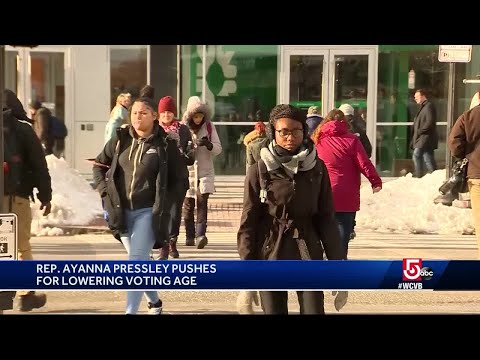
By J. Cottle YCL Coordinator, MassVOTE Slowly but surely, lowering the voting age is developing into a hot-button issue, especially here in Boston. Locally, there’s a push to lower the age to 16 in municipal elections, and in Washington, our Congresswoman Ayanna Pressley wants to lower it nationally and allow them to vote in general elections. I’ll admit, I was surprised to discover the intense opposition to granting 16 and 17 year-olds the right to vote. To me, it seemed obvious, practical and long overdue. I’m an educator. After working in local high-schools, I transitioned to the non-profit sector where I run a civics and leadership development program for teens. Every day I recruit, hire, and educate phenomenal young minds. In my role, I am a part of discussions, workshops, meetings, and events usually produced and facilitated by young people. They’re brilliant and they care about the world. According to Sylvan Lane’s article tracing the characteristics of Generation Z “26% of 16-19 year-olds currently volunteer, and 60% want their jobs to impact the world.” They’re inquisitive and passionate and I’m not ashamed to admit that on more than one occasion, they’ve even taught me a thing or two. Historically, young people have been a part of almost every major social and political movement. National Geographic speaks specifically to their contributions to the Arab Spring, The Vietnam War protests, the American Civil Rights Movement, the Tinanmen Square Protests, and most recently the March for Our Lives Movement. That being said, it’s easy to point to the shining stars when making a counter-argument, but if we’re being honest the vast majority of teens aren’t in programs like the ones I mentioned. Critics of this initiative say that young people don’t know enough, are too immature, or that their brains aren’t fully formed and as such should not have the right to participate in democracy in its most fundamental form. Young people, (like any group) are not a monolith. It’s true that some young people are immature. It’s even truer that most don’t understand how this process works and are wildly uninformed about the world around them. I’ve seen these young people. I’ve met these young people. So I taught these young people. My confusion at the argument that young people are unprepared for the ballot box is that no one discusses how to prepare them, and even more, strangely have seemingly absolved themselves of the responsibility to do so. Isn’t it the older generations responsibility to make sure that young people are prepared to play active roles as citizens? Doesn’t it fall to our school systems to teach them how a government works? Is it not on parents and guardians to lead by example and bring their children along to the ballot box? What do teens have to contribute in order to be a part of the electorate? 16 and 17 year-olds have jobs. They pay taxes. Gun Control, one of the greatest policy debates we’re currently facing, affects them at a disproportionate rate. While gun violence on the whole in the US has gone down, according to research from the Center for Homeland Defense and Security, 2018 was the worst year in history for school shootings. There were 94 of them. When we’re upset, we refer to them as young adults in an effort to help them mature and make more responsible decisions. So much so, that when they commit crimes, a disproportionate amount of them are tried as adults. In fact, the Bureau of Justice found that from 1990-1999 the amount of youth held in adult jails rose 311%. While that number has begun to decline, in 2016 over 3,000 young people were still incarcerated. It would seem to me that we think young people are capable and responsible only when it suits us. Young people are intelligent. They take tests that adults with degrees could barely pass. They’re taking care of their families, running businesses, leading walkouts and rallies, and constantly make decisions that affect the rest of their lives. Every day I come into contact with young people that excite me not just for their potential but for the depth of being they present right in this very moment. They are people I want voting. And for those of you that think the young people in your lives just aren’t ready, maybe ask yourself what you can do to help them get them there.
- MARCH 2019 NEWSLETTER
THE NEW VOTER INITIATIVE MassVOTE is putting the final touches on its new and improved voter outreach program. The aim of the initiative is to welcome new voters and maintain contact with registered voters throughout the years. The program strives to increase voter registration while also keeping voters active and informed for every election thereafter. The new voter kit includes numerous items from voting resources to swag (t-shirts, buttons & or a bag). A kit will show voters individually who their reps are, where they vote, what is on the ballot, what certain positions do and much more for an informed electorate. After the initial kit is sent, voters from then on out will be receiving quarterly mailings with continued resources dedicated to aiding their path to the ballot box with confidence. YCL Director J. Cottle believes the goal is to "enhance the experience and create habitual and informed voters for life." The new initiative will launch in time for the 2019 municipal elections. YCL SPOTLIGHT: MARIANNA What is needed to make voting easier? "I think that there are several things to be done in order to make voting easier. First off, I think that in certain circumstances, voting should be done online. Almost everyone has access to the internet or a mobile device. We certainly have the technology to create a program to allow voters to safely vote online, so why not? It’s definitely a lot more convenient to a lot of people. It could also possibly decrease the recent stigma around voting as it is commonly said of people around the country that their “vote doesn’t matter.” For specifically my community, there could be an improvement of the voting precincts. The precincts around me are schools that already need major renovations. I also notice that the technology there could be updated for faster voting time, which would also prevent long waiting lines. I also noticed the lack of officials there to help voters. There needs to be a lot more regulation in precincts because there are new voters every year and they don’t usually come in with prior knowledge on the experience of voting. " How do you remain non-partisan in your role as a YCL? "In a job where opinions can easily be manipulated, it is important for yourself to remain unbiased. For some, it can be hard but you must remember that the audience you are attempting to reach is diversified in different thought. You want to have the ability to appeal to any and everyone. You must know that to gain all the support you can, it is crucial to remain as neutral as possible. That is how I think of non-partisan as a Young Civic Leader. At work, I try my best to put aside my opinions and stay open-minded to others' opinions, no matter how different they may be. My role as a YCL is not to change or distort ideologies, but rather inspire and inform on civics, politics and community engagement." BOSTON CENSUS KICKOFF Mimi Ramos, Executive Director of New England United for Justice is a CEI Grantee of MassVOTE and a well-known community figurehead. On April 1st Mimi gave the opening remarks as well as MC'd for the city-wide Boston census kickoff at the East Boston Public Library. The Census affects a variety of community needs, from proper school funding to ensuring fair re-redistricting lines. Every person not included in the census equates to over $2,000 in lost federal dollars for Massachusetts. Ramos described the event as crucial to the next 10 years of success for our schools, community services and so much more. As of now the Massachusetts House of Representatives has dedicated an additional 2 million in resources for census outreach. To Learn More about The 2020 Census Efforts Click Here... MASSVOTE TALKS PRECINCTS AT BOSTON CITY HALL The Boston City-Council Committee on Government Operations requested MassVOTE to testify in regards to proposed changes to the city's precincts. Currently, the city is enduring long wait times to vote due to overpopulated precincts. Boston has not formally re-drawn its ward lines since 1920 and has a unique and archaic exemption from doing so. As of 2018, the average precinct among registered voters in Boston contained 1,620 registered voters. Precincts in Chinatown have an average of over 5,000 along with other areas of downtown including the South End, North End, Beacon Hill and City Hall areas. This data fails to account for the eligible voting population so numbers are potentially higher. Policy & Communications Manager Ian Kea said, "Sub-precincts are band-aid solution to this issue. If we want to take this issue head-on we must go back to the board once the 2020 Census concludes and consider Boston's rapidly shifting demographics. These proposals are only short term solutions to a bigger issue. Look to Colorado, Oregon, and Washington where vote-by-mail is offered. Vote by mail would significantly reduce costs of administration but would also cure the plague of long lines at the polls. A vote-by-mail system would notify voters of elections, allow them to vote from their homes and not interrupt their hectic schedules with a stop to the precinct. In the states mentioned nearly 70% of the population casts their ballot by mail, they can even drop it off the day of the election up till 8PM at a drop box center just like sending a postcard. If we want to make voting easier on both administration and for voters, vote-by-mail needs to be pushed by our Councilors to our representatives on Beacon Hill." The City Council passed the sub-precincting plan last week and are awaiting approval from the state in the form of a home-rule petition filed by Mayor Walsh. sub-precinct plan
- Massachusetts falls in voter turnout nationally, renewing call for Election Day Registration (EDR)
For more information contact Ian Kea at ikea@massvote.org or 617-542-8683 (Opinion Letter to the editor) TO MODERNIZE ELECTIONS, MASSACHUSETTS NEEDS ELECTION DAY REGISTRATION A state’s ability to ensure an easy path to the ballot box determines the strength of its democratic functions. If this is the case then the Commonwealth of Massachusetts is behind. Every single election Massachusetts along with 29 other states in the U.S. disenfranchise hundreds of thousands of its own citizens by not offering Election Day Registration (EDR). In Massachusetts alone, 170,000 citizens are unable to cast their ballot due to not having EDR. The Commonwealth is not only depriving those that want to vote on Election Day the capability to do so, but also pushing them away from becoming involved in our democratic process. EDR, also commonly known as Same Day Registration (SDR) allows voters who are not yet registered to do so on Election Day, at the polls, and be allowed to vote subsequently. The initiative also allows for an individual to correct and or fix errors in their registration. Since its conception in 1973, 20 states have joined with more like New York soon to be added onto the list. Some may confuse EDR with Automatic Voter Registration (AVR), two different systems that are complimentary of each other. AVR works at the "front end" to enroll new voters for elections yet to take place. EDR works at the "back end" as a fail-safe measure to allow voters to address registration issues when they vote. EDR has a proven track record across the nation. In 2010 over 640,000 people nationwide used EDR on Election Day. On a municipal level in 2016 30,000 Chicagoan's were able to register and cast their ballot using EDR. On a state level and to our north in 2018, 50,000 people in New Hampshire utilized EDR. Yet most of these people interacting with EDR are not new voters. The most critical part of it all is that most people affected by EDR are registered beforehand but have moved and or have clerical errors such as a misspelled name, wrong apartment number and or similar issues. In a study with Non-Profit Vote, it found that two-thirds of those who used EDR were those simply correcting and or updating their registration. In terms of costs, many states have found little to none. EDR states report that the service costs for registering same-day offsets with less provisional balloting staffing and printing. For minimal start up costs Massachusetts has over nearly 40 million in Help America Vote Act Funds (HAVA). As of now that is the most HAVA funds a state has in the nation. Even top administrators such as former Massachusetts Town Clerks Association President Lina Hutchenrider of Barnstable believe EDR is easier than the provisional balloting process stating, "Instead of there being a great confusion and individuals needing a provisional ballot and signing 75 sheets, let them just fill out the card, vote and that's it." According to the recently released report “America Goes to the Polls 2018” prepared by Nonprofit VOTE and the US Elections Project, in 2018 Massachusetts moved down in the rankings, from 14th place to 17th place. Despite this fall Massachusetts performed 10 percentage points higher than in 2014 from 50 to 60 percent in 2018. Although our turnout may be higher, more states are taking greater action on making the ballot box more accessible. The recent study showed that seven of the top ten states with the highest turnout offer EDR. Altogether states with EDR policies had turnout rates seven percentage points higher than non-EDR states. In New England VT (#11), NH (#15) & ME (#6) clocked in the top fifteen for voter turnout and all unsurprisingly offer EDR. On Beacon Hill the Senate has passed EDR not once, not twice but three different times. In a time of political uncertainty, we must have leadership in the House that can rise to the occasion. As a living legacy of the civil right acts of 1965, MassVOTE urges the House to be a model for democracy and lead not just the Commonwealth but the nation once again. Ian Kea Policy Director MassVOTE (The report America Goes to the Polls 2018” prepared by Nonprofit VOTE and the US Elections Project can be found at https://www.nonprofitvote.org/america-goes-to-the-polls-2018/)
- MassVOTE February 2019 Newsletter
2019 Democracy For All (DFA-CEI) Grantees Asian Amer. Resource Workshop (AARW) | Brockton Interfaith Community (BIC) | Cambodian Mutual Assistance Association of Greater Lowell, Inc. (CMAA) | Chelsea Collaborative | Coalition for a Better Acre | DBEDC: Youth Force | Greenroots | La Comunidad | Mass Alliance of HUD Tenants | Massachusetts Affordable Housing Alliance (MAHA) | McKnight Community Development Corporation | Mothers United for Justice & Equality | Neighbors United for a Better East Boston (NUBE) | NEU4J, New England United 4 Justice | North Shore CDC | Pearls of Distinction | Project RIGHT, Inc. The Women's Pipeline For Change The Women's Pipeline For Change (WPL) kicked off its relaunch Saturday Feb 23rd. Hosted at the Brockton Public Library the renewed initiative will aid women of color attempting to enter public office. Legislative Update: EDR Filed MassVOTE is proud to announce our head sponsors for Election Day Registration! This session Rep. Liz Malia (left) of Boston and Rep. Jennifer Benson (right) of Lunenburg have agreed to sponsor and push EDR as priority legislative initiatives. Both Representatives have a strong and tenured history of promoting modernized voting mechanisms from Early Voting, Automatic Voter Registration (AVR) and not only endorse EDR but also initiatives such as Ranked-Choice Voting. Together H 636 & H 685 have garnered 55 House Co-Sponsors over a third of the lower chamber. Of the Co-Sponsors, 4th Division Chair, Louis Kafka, a cabinet member for the Speaker, has issued his support for EDR. The House Co-Sponsorship Deadline was February 1st. On the Senate side over one-fourth of the upper chamber has signed on in support including former President of the Senate, Harriette Chandler of Worcester. The Senate has passed EDR on three different occasions and does not have a co-sponsorship deadline. Senate Majority leader Cynthia Creem of Newton is the head sponsor in the upper chamber. YCL Spotlight: Joy How do you stay non-partisan in your role? "As a YCL as well as working with MassVOTE in general, our main job is to inspire and foster a voting culture instead of choosing which party to vote with. We must praise the right to vote and how it can make a change in the community around us. The more people who get increased education on voting, the more chance a positive change can occur. Remaining non-partisan is key because it covers everyone's interests as well as ours whether you are a democrat, republican or whatever the case may be, my job is to educate people on their rights and the potential voting has." What do you say to people who say their vote does not matter? "Voting always matters. Every citizen is responsible for what happens in any election whether it is presidential or local. Your vote can be the one that can swing an election around. Usually, the people who don't vote are t the ones who are not content with the outcome of the election. You can easily and feasibly change that by voting and feel empowered by your voice at the ballot box."
- Need A Reason To Vote? Here’s 51 Of Them
EXCERPT: “It all relates to one thing: Who is in office and how they delegate power,” said Ian Kea, spokesman for MassVOTE, a Boston-based voter advocacy organization. “That comes down to a choice that voters have to make.”
- December 2018 Newsletter: 2019 Legislative Priorities Set
Contact: Ian Kea, Policy & Communications Manager
- November 2018 Newsletter (Post-Election Issue)
Contact: Ian Kea, Policy & Communications Manager